
Ocean View Hotel Rooms vs. Standard Rooms: Which Is Worth It?
When you book a beach hotel almost always this question arises. Is the sight of the water worth an additional cost, or is it better to spend money elsewhere?
There is no single correct answer, and it is more dependent on your trip than on your hotel. Do it right and that’s the best part of the entire stay! Make a mistake and you end up paying for curtains you don’t use. This guide explains the actual meaning of the room names and the additional cost you pay, and how you can make your own decision for your trip.
What Does “Ocean View” Actually Mean?
Hotel room names sound precise, but they very often are not. Two hotels can use the same label for two very different views.
Oceanfront usually means the room faces the water directly, with nothing at all in the way. The ocean view is looser than that. The sea is visible, but possibly at an angle, or past a pool and a row of palms. Partial ocean view is the one to treat with real caution. Sometimes it means a lovely corner view. Other times it means leaning right out over the balcony rail to catch a narrow slice of blue between two buildings.
Standard rooms go by plenty of names too. Garden view, resort view, city view, and mountain view are all common. Some of those are really pleasant. A few are a polite way of saying the parking lot.
How Much More Will You Really Pay?
Additional costs are usually not fixed and can differ significantly. It changes according to the seasons, the day of the week and the occupancy of the hotel.
The difference between an ocean front room and a standard room can be significant in the summer season, or on a holiday weekend. Midweek in the quieter months it often shrinks to something quite small. That’s more important than people think. A view that feels like an indulgence in July can be a very fair deal in October.
Work it out each night and then over the period of stay. A small difference in nightly rates can really make a difference over the course of a week. Then compare that total to what else it could pay for. It’s worth considering a fantastic meal at a restaurant, a cruise or another night spent elsewhere.
How Much Time Will You Spend in the Room?
This is the question that decides it for most people. Be honest with yourself before booking anything.
If the plan is to leave after breakfast and get back after dark, a view does very little. You will mostly see it through the dark, or with the blinds shut while you sleep. A family running between the beach, the pool, and the boardwalk all day is usually better off saving the money.
A slower trip is a very different thing altogether. Coffee on the balcony at sunrise, an afternoon reading with the doors open, or a glass of wine at sunset all turn the room into part of the holiday. Honeymoons and anniversaries fit very neatly into this group as well. So does a trip where somebody needs to rest a lot, since the view keeps them company.
Floor, Direction, and the Balcony
Two rooms that share the same name can be entirely different. The vast majority of that difference is due to a few details.
The first thing to consider is height. Further on higher floors, and above the tops of dunes, beach umbrellas and trees. The lower floors are closer to the waves; a hedge or pool bar can make a lot of difference. Direction matters too. You can see the sunrise over water from the east facing coast. On a west-facing coast you have the sunset and most people enjoy it just because they are awake to see it.
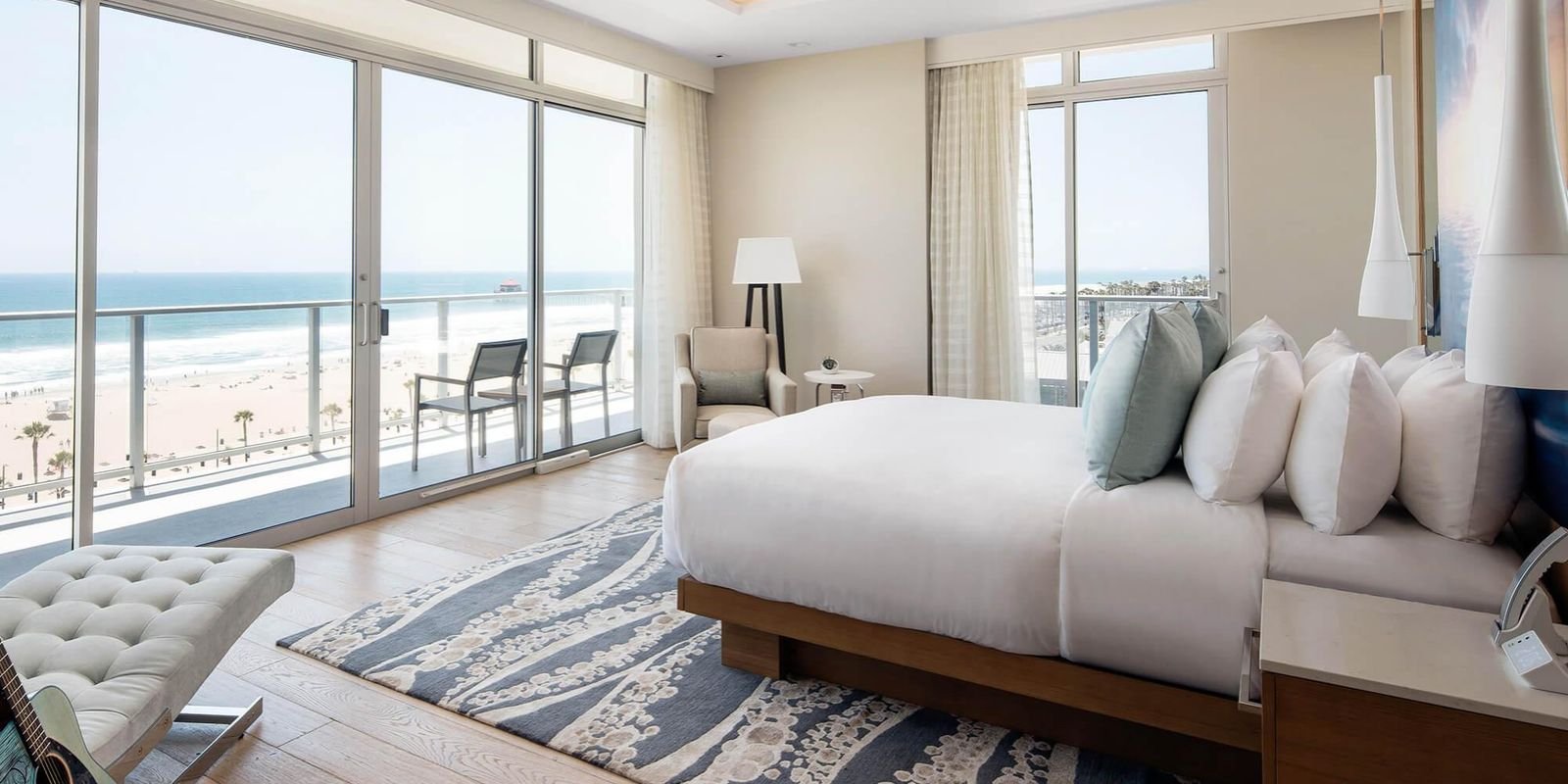
Next, determine if the room actually has a balcony. A few ocean view rooms have a window which is not designed to be opened. Often the real reason for the view is a balcony, even though it may be small.
The Downsides Nobody Mentions
An ocean view room is not perfect, and a couple of drawbacks catch people out. None of them are deal breakers, but they are worth knowing about.
Light is the first one. East facing rooms fill with bright sun very early indeed, so check that the curtains are properly blackout. Noise is another. Some people find the waves soothing at night, while others lie awake listening to them. Beachfront rooms can also sit above a busy road, a beach bar, or a pool deck with music playing late.
Wind and salt air come with the territory as well. Balcony doors are often harder to leave open on a breezy day. Sand gets carried in on everything, however careful you are. Families with small children should also look closely at balcony railings on higher floors.
Does the Season Change the View?
What you see from a particular room can vary significantly throughout the year. When you are planning to travel, it is good to consider it.
The summer season is generally the time for calm waters, long evenings, and lots of time to be outside on the balcony. However some coastlines experience morning fog early in the Summer, which can obscure the sea until lunch time. Winter tends to be more calm, but with coarser water and larger, dramatic waves.
Plenty of people find that the most memorable view of all, especially from a warm room with a hot drink. Storm shutters can also be closed for a day or two during hurricane season. Check with the hotel what the view normally looks like on the dates you will be staying.
When Is a Standard Room the Better Choice?
A standard room is not a lesser choice, and it is very often the smarter one. Plenty of seasoned travelers book them on purpose.
They are usually cheaper, and frequently quieter too, since they face away from the beach crowds and the road. Some are larger than the view rooms, because the best frontage has been divided into smaller units. Most importantly, the beach itself is usually only a short walk away. If the hotel sits right on the sand, everyone gets the same ocean the moment they step outside.
Shorter stays are another good reason. For one or two nights, much of that time is spent asleep or out. The premium simply has less time to pay off.
Can You Get the View Without Paying Full Price?
Yes, quite often, with a little planning. Hotels have more flexibility on room types than most guests realize.
Booking directly with the hotel, rather than through a large booking site, gives you more room to ask. Phone and ask what the difference is on your exact dates. Then ask whether an upgrade might be possible at check in. Midweek arrivals and quieter seasons improve the odds a great deal. So does mentioning a birthday or an anniversary, politely and without expecting anything.
Another option is to split the stay. Book a standard room for most of the trip, and an ocean view room for the last night or two. You still get the view, at a fraction of the cost. Just ask whether the hotel can store your bags, so the room change is easy.
Check the View Before You Book
Photographs of hotels are carefully selected and most often are captured from the hotel’s finest room. A bit of homework makes a lot of difference.
Check out recent guest reviews on the site, paying close attention to photos, and, if possible, narrow it down to your type of room. Those reveal the true scene including railings and rooftops. A satellite map is also extremely helpful. It reveals exactly what lies between the building and the water, whether it be sand, a road, or another hotel. Don’t hesitate to ask the hotel directly which floor and which side the room would be located on if anything is unclear.
Conclusion
An ocean view room is worth it when you will actually spend time in it. Slow trips, special occasions, and stays with a balcony all make the premium easier to justify. Busy sightseeing trips, short stays, and tight budgets usually point toward a standard room.
Before you book, Ocean View Lodge is happy to tell you exactly what each room overlooks. Please call or message us with your dates! We will candidly tell you which rooms offer the best views, and if the upgrade will be worth your journey.